This is the most common version of rising damp in Ipswich, and it is created by a renovation rather than by the original house.
Talk it throughRising Damp Ipswich arranges damp assessments across Ipswich and the western corridor.
A timber Queenslander stands on stumps with air moving underneath it. There is no contact between the ground and the wall, so there is no route for water to climb. Whatever is wrong with a wall on the upper floor of a Queenslander, it is not rising damp, and anyone who tells you otherwise has not looked underneath.
Between roughly 1960 and the 1990s, building in underneath was the cheapest way to add a bedroom, a rumpus, a laundry or a garage. The work put brick or besser block on the ground, very often on a slab poured level with the yard, and very often with no damp proof course in it. Nobody specified one, because the house it was being attached to had never needed one.
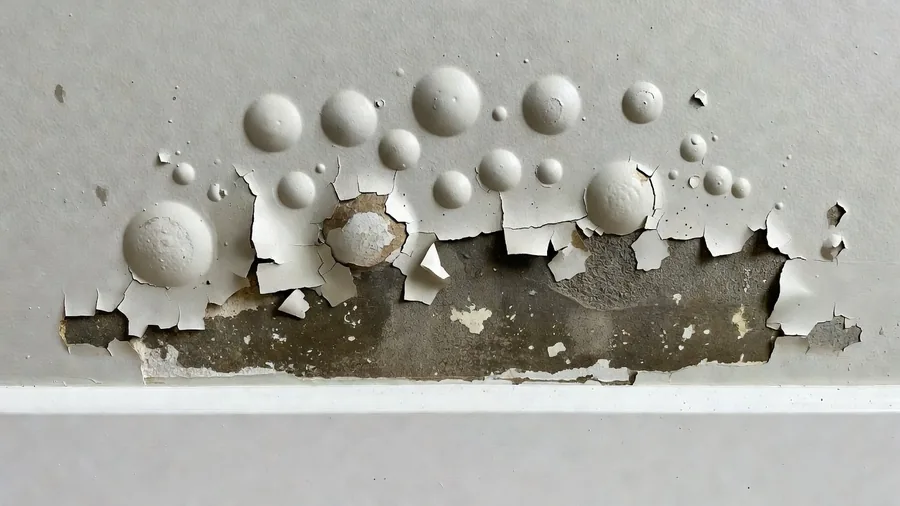
The result is a ground-level room with masonry walls sitting directly on wet soil, frequently with a paved path or driveway hard against the outside. That is a textbook rising damp condition, and there are thousands of them in Ipswich.
Not always a chemical damp course. Where the enclosure is ventilated badly and the ground outside is high, correcting the levels and getting air moving can be the whole fix, at a fraction of the cost. Where the blockwork genuinely has no barrier and the ground cannot be lowered, a barrier is the answer. That decision is made on site, and it is why we will not quote a treatment over the phone.
Related: subfloor ventilation and condensation or rising damp.
We take enquiries across the Ipswich local government area and the western corridor.
 Rising Damp Ipswich