On a timber house, damp is more likely to be a ventilation problem than a damp course problem - and ventilation is much cheaper.
Talk it throughRising Damp Ipswich assesses and treats damp across Ipswich and the western corridor.
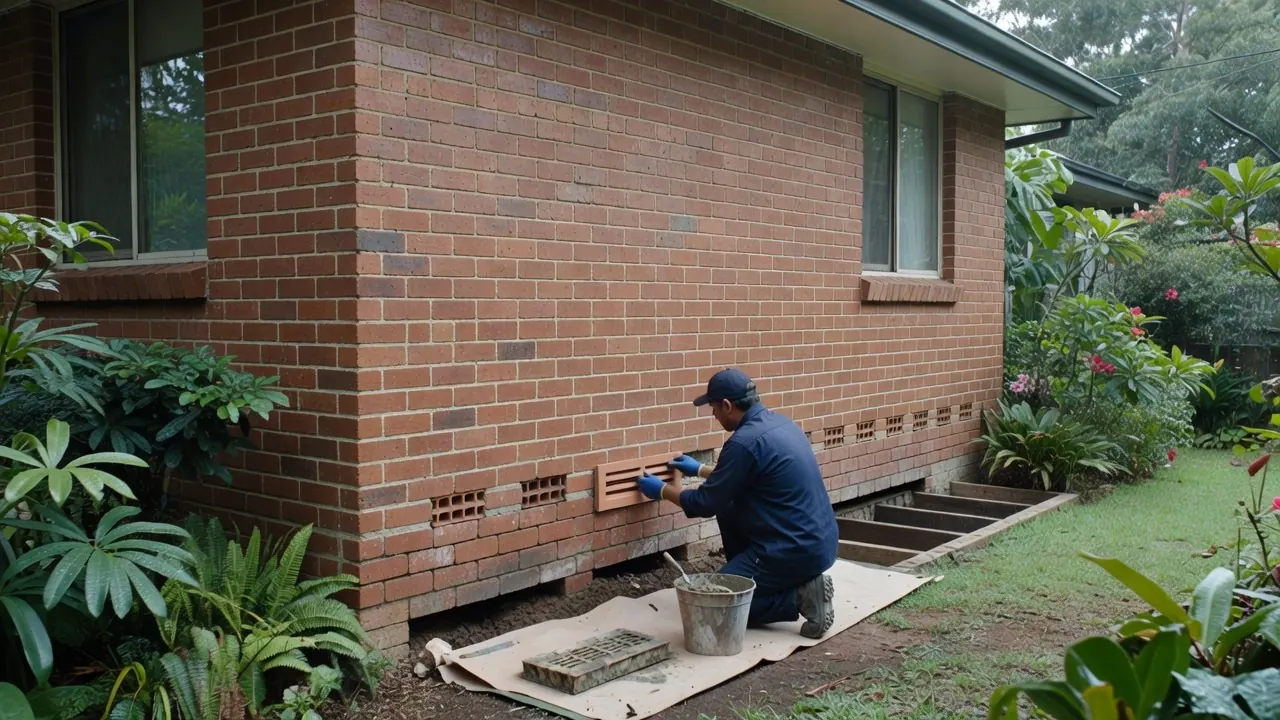
A house on stumps is designed to have air moving under the floor, carrying moisture out from under the building before it reaches the timber. When that airflow stops, the ground under the house stays wet, the humidity underneath climbs, and the floor structure takes it up. There is no wall for water to climb, so a chemical damp course has nothing to do here.
Usually additional vents, and clearing whatever is blocking the existing ones. Where a house has been built in underneath and passive airflow is no longer possible, powered extraction on a humidistat does the same job actively. Getting water away from the perimeter matters as much as the vents themselves.
A masonry wall with no damp course and wet ground against it. Ventilation reduces the humidity in a space; it does not stop water climbing through brick. Where both conditions exist - and on a built-in-under Queenslander they often do - both need addressing.
We work across the Ipswich local government area and the western corridor.
 Rising Damp Ipswich