Rising damp is ground water climbing a wall. Everything else - the salt, the lifting paint, the smell - follows from that one fact.
Talk it throughRising Damp Ipswich arranges damp assessments across Ipswich and the western corridor.
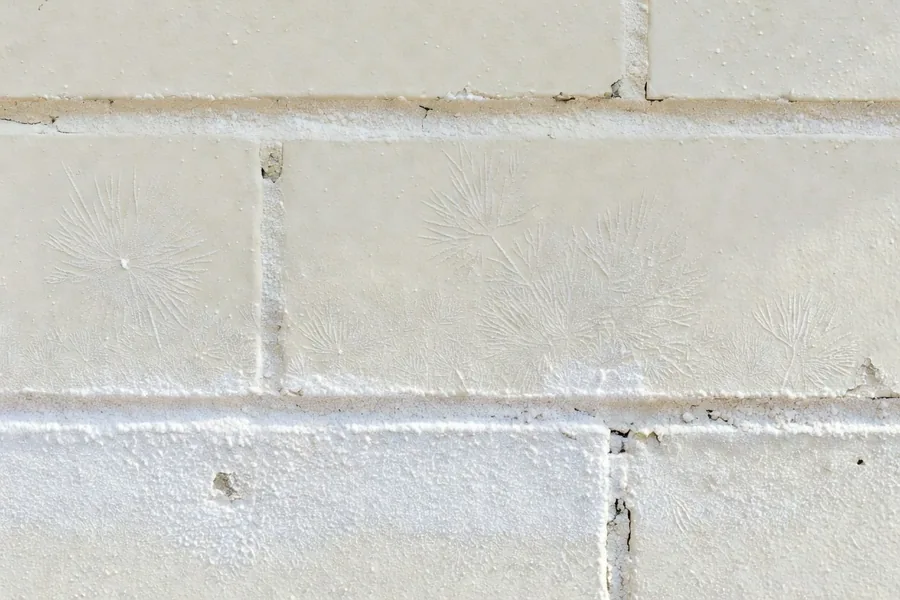
Ipswich is the oldest provincial city in Queensland, and it has the housing to prove it. The centre and the older suburbs carry solid masonry from the 1860s onward, built before the damp proof course was standard practice and in many cases built without one at all. A solid wall is a single continuous path from the footing to the plaster, so whatever is in the ground has a route all the way up.
Around that centre sits the timber Queenslander, and the Queenslander is where most of the confusion starts. A house standing on stumps with air moving underneath it cannot get rising damp in its walls. There is no contact with the ground for water to climb. Owners are told otherwise surprisingly often, and it is not true.
What is true is what happened to thousands of those houses later. Between the 1960s and the 1990s, building in underneath was the cheapest way to add a room, a laundry or a garage. That work put brick or block on the ground, frequently on a slab poured level with the yard, and almost never with a damp proof course — because the house above it had never needed one. That is a rising damp mechanism created by a renovation, and in Ipswich it is the single most common one we see.
Then there is the interwar and early postwar brick on the ridges. That housing usually does have a damp course, typically bitumen, and bitumen has a service life. It goes brittle with age and it fails quietly, with nothing visible happening on the outside of the building.
Finally, the newest housing. Brick veneer standing on a slab with a membrane under it does not get rising damp, whatever the wall looks like. If a house was built in the last thirty years and a wall is wet, the cause is a leak, a shower, drainage or condensation. Saying otherwise would be the fastest way to lose an owner's trust, and it would also be wrong.
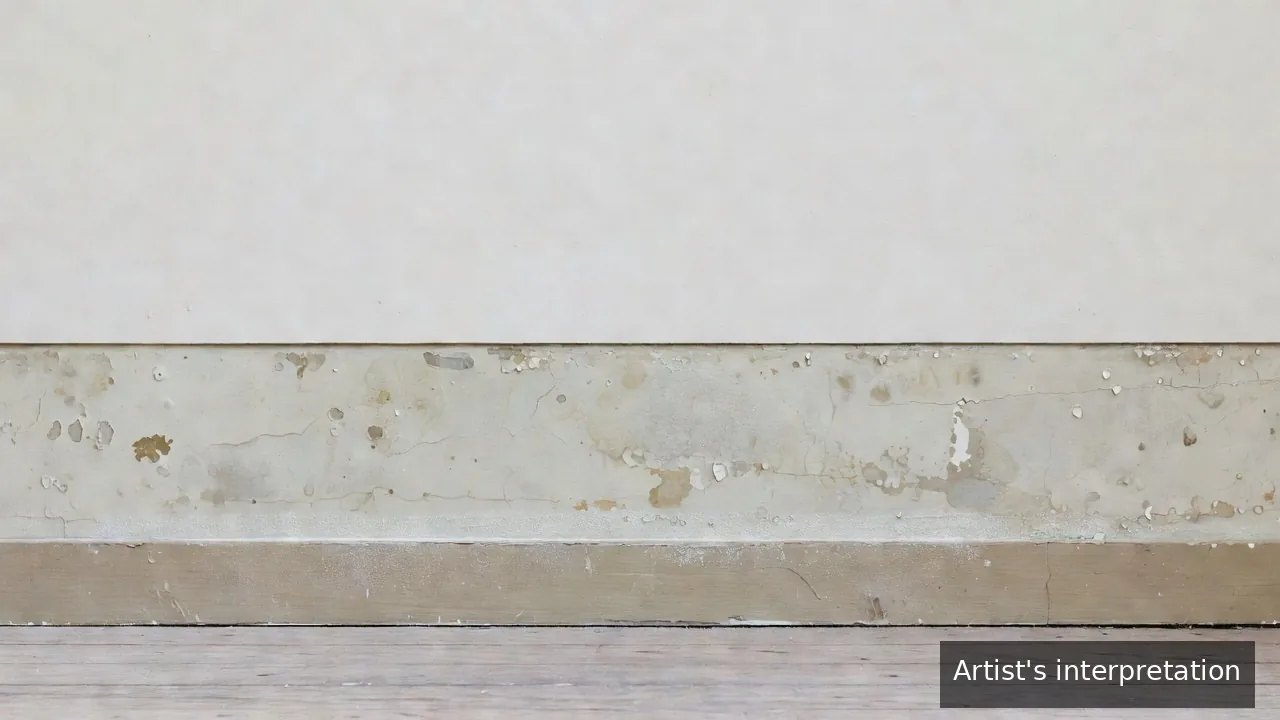
Water climbs until it evaporates off the face of the wall as fast as it arrives from below. That balance point is usually somewhere between 600mm and 1.2m up, and it is remarkably level, because the physics is the same along the whole wall. A leak makes a patch. A roof makes a stain that runs downward. Rising damp draws a line.
Ipswich has a humid subtropical climate with most of its rain arriving between November and March, often in heavy falls rather than steady drizzle. That pattern matters for damp in two ways. Ground that is saturated repeatedly through a wet summer keeps a wall wet long enough for water to climb it, and the same humidity produces condensation on cool internal surfaces through the cooler months. The two look alike to an owner and behave completely differently. A wall that is worst in February and improves by August is behaving like ground water. A wall that is worst on cold mornings, in a bathroom or a closed-up room, is almost certainly not.
We take enquiries across the Ipswich local government area and the western corridor.
 Rising Damp Ipswich